APINDO Cilegon Calls for Stronger Link and Match Between Education and Industry
Thursday, 27 August 2026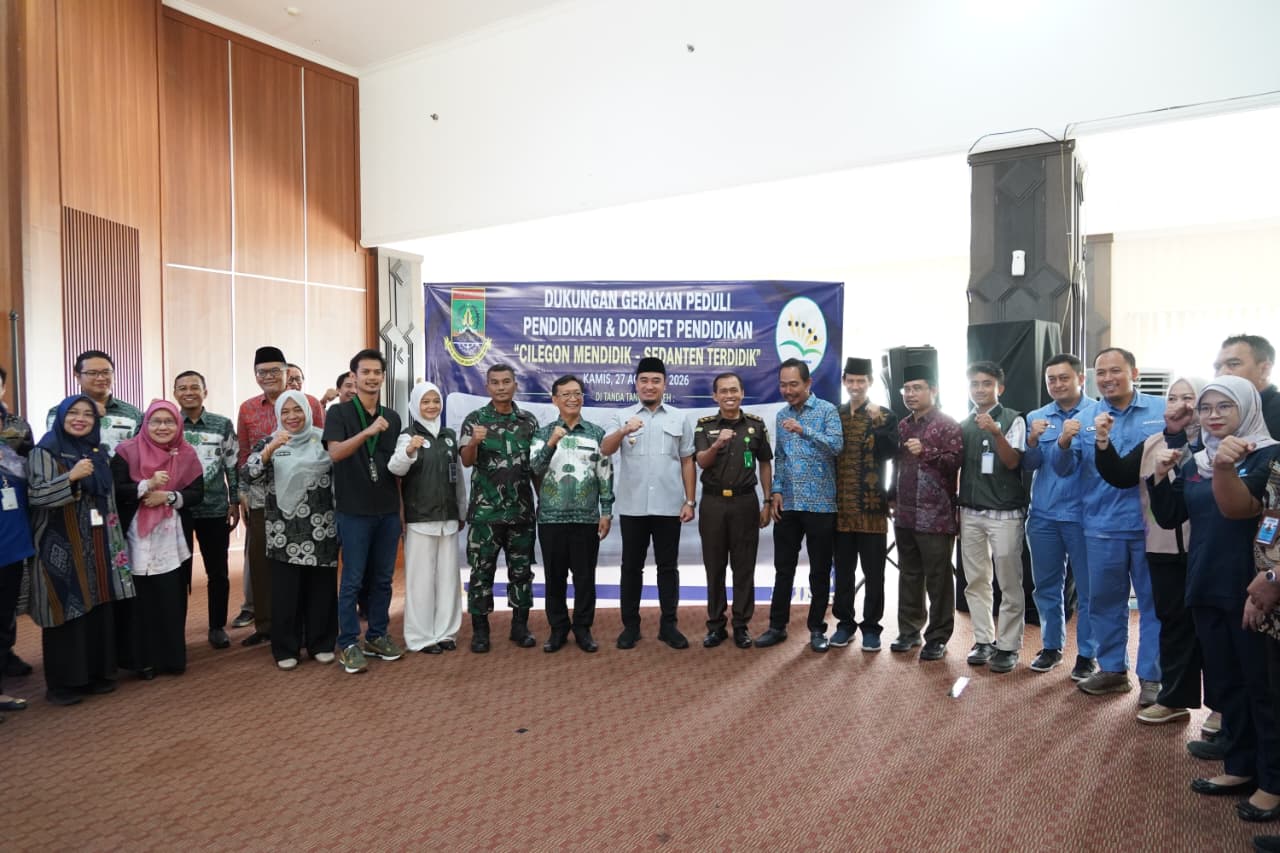
CILEGON — The Indonesian Employers Association (APINDO) Cilegon is calling for stronger collaboration between the education sector and industry to improve the quality of human resources and ensure that graduates possess skills that meet labor market needs.
Chairman of the Cilegon City APINDO Leadership Board, Najib Hanafi, said improving the quality of human resources must be a shared priority. According to him, the business community should not merely serve as a user of labor, but also be involved in the education and training process from an early stage.
“Improving human resources must involve APINDO Cilegon members. This can be done through education and training programs, allowing businesses to contribute directly to improving the quality of education,” Najib said.
He said APINDO has a strategic role in encouraging greater business-sector involvement in education development at the city and provincial levels, as well as through cooperation with APINDO's national leadership.
According to Najib, such collaboration can be established with universities, schools and other educational institutions. Businesses can provide opportunities for industry practitioners and entrepreneurs to participate in various educational programs.
“Universities can work with APINDO by bringing in practitioners, involving businesspeople and developing programs that genuinely address industry needs,” he said.
Najib also emphasized the importance of narrowing the gap between educational curricula and workplace requirements. One way to achieve this, he said, is by expanding practical training and learning programs that provide direct exposure to industry.
“The link and match approach is important to ensure that the gap does not become too wide. Curricula should be aligned with industry needs, skills development and human resource improvement,” he said.
He stressed that education should not be confined to classrooms. Students need real-world experience through fieldwork, internships and direct interaction with industry practitioners.
“Education requires talent, entrepreneurs and practitioners to participate as instructors. Education does not take place only at school, but also in the field. Students need to gain firsthand experience of actual workplace conditions,” he explained.
APINDO's call is in line with efforts by the Cilegon City Education Council and the Cilegon City Government to strengthen cross-sector collaboration through the Cilegon Education Care Movement and the Education Fund program.
The initiative is designed to encourage collective action among the government, business community, universities and the wider public in addressing educational challenges.
Chairman of the Cilegon City Education Council, Syaeful Bahri, previously said the Education Fund would serve as an instrument for mobilizing support from various stakeholders to address educational needs that cannot be fully covered by the government.
“The key objective is to improve the quality and growth of human resources,” Syaeful said.
He emphasized that the Education Council can serve as a bridge among various stakeholders, including government institutions, industry, universities, religious schools and the broader community.
Meanwhile, Najib said industry participation through the Education Fund represents a concrete form of corporate social responsibility in improving the quality of human resources in Cilegon.
He expressed hope that people from economically disadvantaged backgrounds would continue to have opportunities to pursue their education.
“The Education Care Fund can serve as a means of providing support to people who are financially disadvantaged. Industry can also contribute to financing education in Cilegon,” he said.
Through stronger collaboration between education and industry, Cilegon is expected to produce graduates not only in greater numbers, but also with competencies aligned with industry requirements, thereby strengthening the competitiveness of the local workforce.
Source: Rubrik Banten