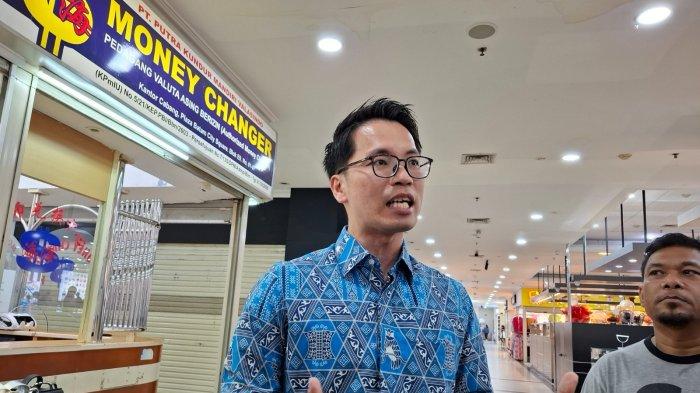
North Kalimantan Fisheries Exports Still in Progress as APINDO Chairman Peter Setiawan Opts to Complete Licensing Requirements
Sunday, 05 July 2026
TARAKAN, North Kalimantan – Direct shipments of fisheries commodities and crabs from North Kalimantan (Kaltara) to overseas markets are still undergoing adjustments.
The shipments were temporarily disrupted due to additional requirements that exporters must fulfill.
Chairman of APINDO North Kalimantan, Peter Setiawan, said some business operators are still completing the required permits, although export activities by several other companies have already begun to resume.
“As for me as a business operator, I am still processing the required permits,” Peter said.
The permits include the Processing Eligibility Certificate (SKP) and the Hazard Analysis Critical Control Point (HACCP) certificate.
HACCP is an internationally recognized food safety standard required to access global markets, including those in the United States, Europe, and Asia.
Meanwhile, the SKP is a mandatory document issued by Indonesia’s Ministry of Marine Affairs and Fisheries to ensure that exported fisheries products are safe, hygienic, and compliant with international food safety standards.
Peter said the licensing process had been underway for about a week.
He said the main obstacle was not a lack of support from the regional government, but the administrative process through the Online Single Submission (OSS) system.
OSS is Indonesia’s integrated electronic business licensing platform.
“It has been about a week. The process is taking time because entering the data into OSS is somewhat complicated and rather slow. That is the only issue. The North Kalimantan provincial government is ready to provide support,” he said.
According to Peter, if all requirements are complete and no problems arise, the licensing process can generally be completed within approximately one month.
“Usually, if there are no problems, it can be completed within a month,” he said.
He explained that requirements such as SKP and HACCP also depend on the destination country.
Some countries continue to accept products without those specific certificates, but exporters must still comply with Indonesian regulations.
“Actually, if you ask whether they are mandatory, yes, they are. But it depends on the destination country. In Hong Kong, HACCP is not required; products can enter with quarantine clearance alone. It really depends on the destination. But under Indonesian regulations, the certificates are required,” he said.
At present, Peter is still processing the SKP and HACCP certificates for fresh products.
“I am still processing the SKP and HACCP for live, fresh products. Once they are issued, we will be able to resume [exports],” he said.
Peter said he had received information that a direct shipment to Shenzhen, China, was scheduled to take place on July 7 via My Indo Airline.
“I received information that on July 7 there will be a direct shipment to China, specifically Shenzhen. Later, Mahindu will handle it. I am still waiting for that opportunity. The Shenzhen market is better than the Hong Kong market,” he said.
Although there had been discussions about providing a temporary relaxation that would allow exporters to continue shipping goods while completing the licensing process, Peter said he preferred to complete all requirements first.
Meanwhile, he confirmed that other business operators were continuing to ship their products, particularly fish transported by air.
“Other colleagues are still shipping. Most recently, fish was shipped by air,” he said.
For live commodities such as the crabs he handles, the products continue to be transported by sea to Tawau, Malaysia, before being forwarded to China.
“What I handle is shipped to Tawau, and from Tawau to China by sea. It still goes through quarantine. Everything is legal,” he explained.
Peter acknowledged that the introduction of new regulations had made the export process more complicated, as businesses must now comply with multiple requirements.
“If you ask whether it makes things more difficult, yes, it does. There are two sets of regulations. We need to be sensible because businesses will always choose the most efficient and cost-effective route. But now we have to comply with the regulations in place,” he said.
Nevertheless, he said the government continued to provide support throughout the licensing process. The main challenge, he noted, was the time required for administrative processing through the OSS system.
“If you ask whether the process has been made easier, they are supportive. It just takes time because of the OSS system. Sometimes it works quickly, and sometimes it can be slow. At times the system encounters errors or we cannot log in. So it really depends on the system as well,” he concluded.
Source: Tribunnews Kaltara