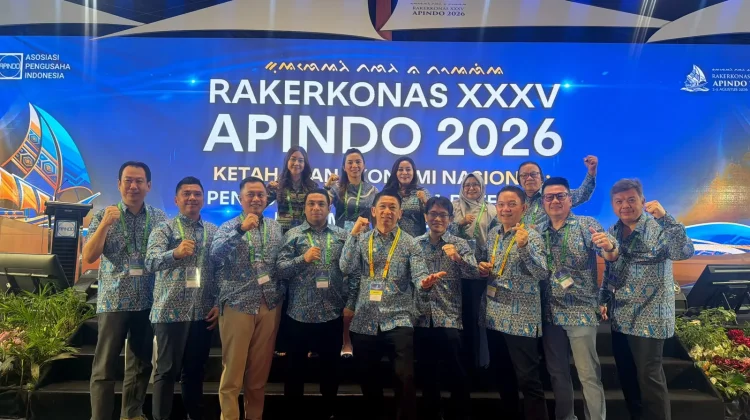
Apindo Batam: Weakening Rupiah Does Not Disrupt Investment, Boosts Exports and Tourism
Saturday, 17 January 2026
Batam — The depreciation of the rupiah, which has fallen to Rp16,758 per US dollar, has instead created a strategic momentum for the business sector in Batam. While the weaker currency poses challenges for import-dependent industries, it opens significant opportunities for export-oriented industries and the tourism sector.
Chairman of the Indonesian Employers Association (Apindo) Batam, Rafki Rasyid, said the weakening rupiah does not necessarily hinder industrial activity or investment in the region. On the contrary, Batam’s economic structure, which is largely dominated by export-oriented industries, allows many businesses to benefit from the current exchange rate conditions.
According to Rafki, most investors in Batam sell their products in US dollars, while key production costs such as labor and operational expenses are paid in rupiah. This creates a favorable exchange rate differential that adds value for businesses.
“Investors operating in Batam sell their products in dollars, while a significant portion of their costs are paid in rupiah. This exchange rate gap provides additional benefits,” he said on Saturday (January 17, 2025).
He also emphasized that fluctuations in the rupiah exchange rate have not had a significant impact on foreign direct investment (FDI) interest in Batam. The main factors influencing investors, he noted, remain regulatory certainty, the availability of incentives, and supporting infrastructure.
“Investment interest in Batam is not greatly affected by exchange rates. The more decisive factors are regulatory certainty, incentives, and supporting infrastructure,” Rafki said.
From an international trade perspective, the export sector stands to benefit the most. A weaker rupiah makes rupiah-based production costs more competitive when converted into US dollars, thereby enhancing the competitiveness of Batam’s products in global markets.
“Exporters can lower their selling prices in international markets without reducing profit margins. As a result, products from Batam become increasingly competitive,” he explained.
Beyond industry, the weaker rupiah also presents significant opportunities for the tourism sector in the Riau Islands. The depreciation of the rupiah against the Malaysian ringgit and the Singapore dollar is expected to encourage an increase in tourist arrivals from both countries to Batam.
“Their money goes further when exchanged into rupiah. This is a momentum that should not be missed,” Rafki said.
He urged local governments and tourism industry players to move quickly to capitalize on the situation through more aggressive promotion, the organization of international-scale events, and the strengthening of tourist attractions in Batam and other parts of the Riau Islands.
“It all comes down to how well we promote tourism. If this momentum is captured properly, tourist arrivals could increase significantly,” he added.
Nevertheless, Rafki cautioned that businesses still dependent on imported raw materials need to remain vigilant about potential cost increases resulting from the weaker rupiah.
Overall, however, he believes Batam’s industrial structure is relatively more resilient in facing exchange rate volatility compared to many other regions in Indonesia.
Source: batamstraits.com