Melkianus Tebai Brings Business Perspective to BUMDes Management Training for 79 Villages in Dogiyai
Monday, 19 October 2026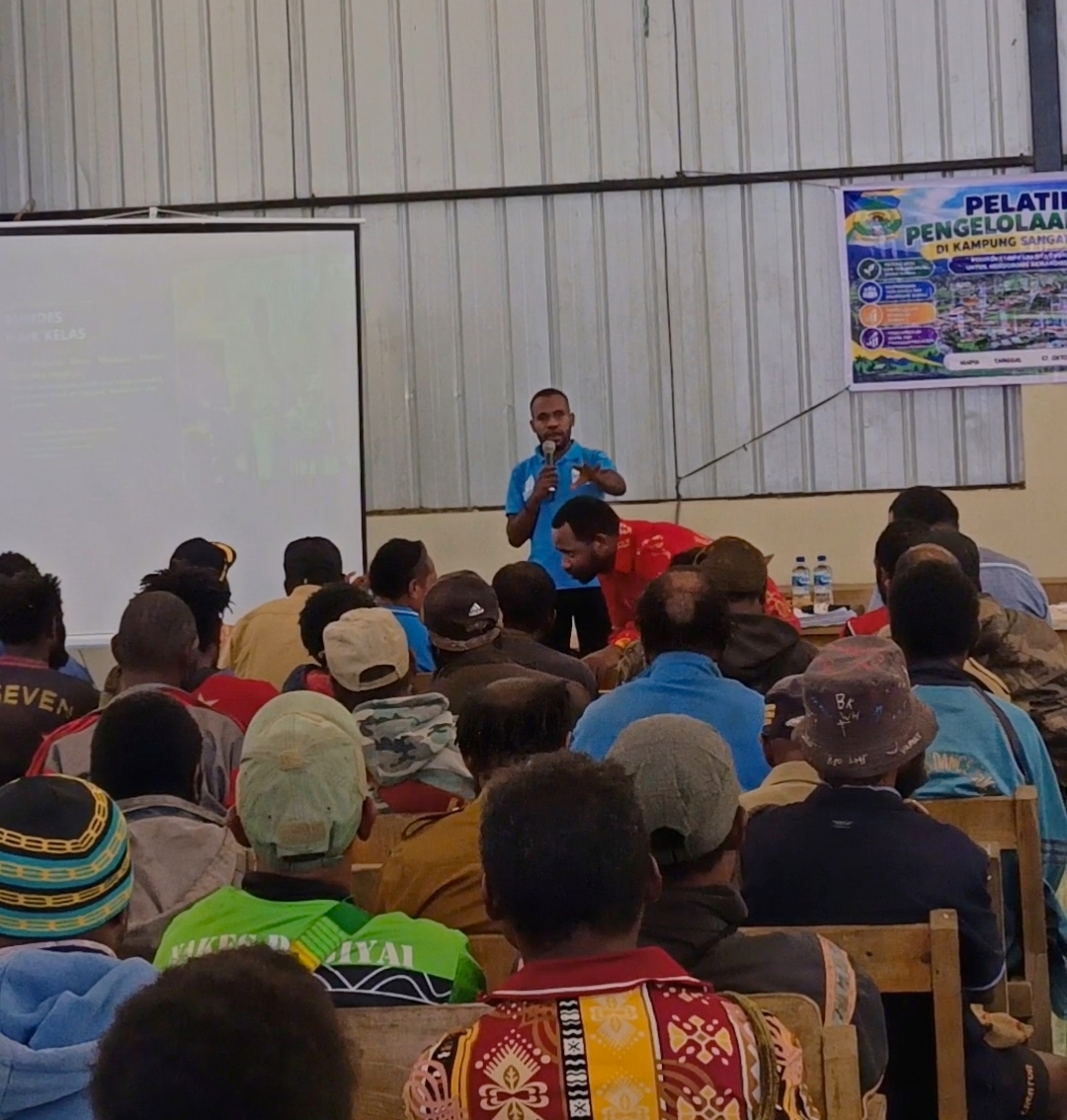
DOGIYAI, CENTRAL PAPUA — Melkianus Tebai, Chairman of the Indonesian Employers Association (APINDO) in Dogiyai Regency, brought a business-sector perspective to a Village-Owned Enterprises (BUMDes) Management Training Program involving 79 villages across the Kamuu and Mapia areas of Dogiyai Regency on October 16–17, 2026.
He emphasized the importance of developing village businesses based on local potential, community needs, and market opportunities to stimulate regional economic growth.
Melkianus's participation as one of the speakers reflected efforts to bridge community empowerment programs with an entrepreneurial approach. Through the business-sector perspective, BUMDes development is expected to go beyond institutional establishment and lead to the operation of productive, professionally managed, and sustainable business units.
The training was organized by the Dogiyai Regency Office of Community and Village Empowerment (DPMK), in collaboration with the Dogiyai Regency Board of APINDO (DPK APINDO Dogiyai).
The program aimed to strengthen BUMDes managers' understanding of business governance, local economic potential, and business planning tailored to the characteristics of individual villages.
Melkianus Tebai Encourages Villages to Turn Local Potential into Economic Strength
From the business perspective he presented, Melkianus identified local potential as a fundamental basis for BUMDes development. Each village needs to assess its natural resources, human resources, and market opportunities before determining which business activities to pursue.
Dogiyai Regency has diverse economic potential, ranging from coffee, pineapples, root crops, red fruit (buah merah), and agricultural products to locally produced handicrafts. These resources can be developed through production, processing, trading, and marketing activities to generate greater added value for local communities.
However, the availability of natural resources alone is not sufficient to guarantee business success. Effective management requires skilled human resources, managers with integrity, realistic business planning, proper financial records, and an understanding of consumer demand.
For this reason, APINDO's business-oriented approach emphasizes commercial feasibility and market orientation as important considerations in determining the direction of BUMDes development. Each village needs to establish a business model based on its own conditions and capabilities rather than simply replicating business activities undertaken by other villages.
This principle is essential to ensuring that BUMDes have a clear business direction, manage their assets responsibly, generate revenue, and create employment opportunities for local communities.
BUMDes Must Operate as Businesses, Not Merely as Institutions
One of the key challenges in developing BUMDes is ensuring that established institutions actually engage in productive economic activities. The establishment of management structures, administrative documents, and work plans must be followed by measurable business operations.
In this context, a business-sector perspective is important in helping BUMDes managers assess community needs, operating costs, supply availability, management capabilities, and marketing opportunities before launching business activities.
For example, a basic goods retail business needs to consider supplier prices, transportation costs, inventory turnover, and local purchasing power. Meanwhile, coffee-related businesses require attention to product quality, processing methods, supply continuity, and access to buyers.
Service-based businesses, on the other hand, should be aligned with actual community needs and the ability of local workers to deliver services. With proper planning, BUMDes are expected to develop into productive enterprises that generate sustainable economic benefits.
Conversely, business decisions made without proper potential mapping and feasibility assessments risk leaving village economic activities unable to grow.
APINDO Promotes Cooperatives, MSMEs, and Service-Based Businesses
For APINDO Dogiyai, strengthening the village economy depends on more than BUMDes alone. Cooperatives, micro, small, and medium-sized enterprises (MSMEs), farmers, artisans, traders, and service providers also play important roles in building a strong local economic ecosystem.
Cooperatives can support the procurement of essential goods, agricultural marketing, the provision of production facilities, and stronger bargaining positions for their members. Meanwhile, MSMEs have the potential to develop local products with greater added value and expand their reach into broader markets.
The service sector also deserves attention, as it directly addresses community needs while offering opportunities for job creation.
Potential business opportunities that could be explored according to local market conditions in Dogiyai include transportation services, vehicle repair workshops, carpentry, agricultural processing and milling, printing and photocopying, goods distribution, and repair services.
Developing these sectors could create opportunities for young people to establish independent businesses while improving access to essential services for local communities.
Identifying community service needs is therefore an important step before village governments and BUMDes managers determine which businesses to establish.
Such assessments can help identify underserved services, market opportunities, local workforce skills, and potential partnerships with existing businesses.
When developed effectively, BUMDes, cooperatives, MSMEs, and service-based enterprises can complement one another in strengthening economic activity across Dogiyai Regency.
Eight Districts Participate in BUMDes Management Training
The two-day BUMDes Management Training Program involved 79 villages across eight districts in the Kamuu and Mapia areas.
On October 16, 2026, the first session was held at Koteka Moge Hall in Moanemani, involving five districts in the Kamuu area: Kamuu, Dogiyai, North Kamuu, East Kamuu, and South Kamuu.
The program continued on October 17, 2026, with participants from three districts in the Mapia area: Mapia, Central Mapia, and West Mapia.
The participation of these eight districts formed part of broader efforts to strengthen BUMDes managers' capabilities in institutional governance, local economic potential assessment, and business planning tailored to the specific characteristics of each village.
For Melkianus and the APINDO Dogiyai leadership, the training also provided an opportunity to introduce the importance of a business-oriented approach to village economic development, ensuring that available resources can be transformed into commercially viable activities with market potential.
DPMK and APINDO Collaboration Needs Continued Follow-Up
The collaboration between the Dogiyai Regency Office of Community and Village Empowerment and DPK APINDO Dogiyai highlights the importance of involving both government institutions and business organizations in strengthening community-based economic development.
DPMK plays a role in community empowerment and strengthening village institutions. Meanwhile, APINDO contributes business-sector perspectives related to commercial feasibility, productivity, partnerships, and market orientation.
These complementary roles can help ensure that BUMDes development focuses not only on institutional establishment but also on the capacity to operate businesses and generate tangible benefits for local communities.
Nevertheless, training activities need to be followed by concrete measures. Village potential mapping, business plan development, management assistance, and business unit performance evaluations are essential to ensuring that the knowledge gained during training is effectively implemented.
Ultimately, the success of BUMDes development should be measured by business performance, asset management, revenue generation, community participation, job creation, and the economic benefits actually experienced by residents.
Through the participation of Melkianus Tebai, Chairman of APINDO Dogiyai, in the training program, the business-sector perspective is expected to strengthen the direction of BUMDes development while opening opportunities for greater synergy with cooperatives, MSMEs, and service providers.
Strengthening village economies requires more than natural resource potential. It also demands the ability to manage resources effectively, establish businesses that respond to market needs, and create economic opportunities for local communities.
Ultimately, the development of BUMDes across 79 villages in Dogiyai is expected to contribute to a more productive, independent, and sustainable local economy, positioning villages as important centers of regional economic growth.
Source: Tomei.id