Haze Crisis: APINDO Hulu Sungai Utara Distributes 1,000 Free Mask and Vitamin Packages to Students
Thursday, 27 August 2026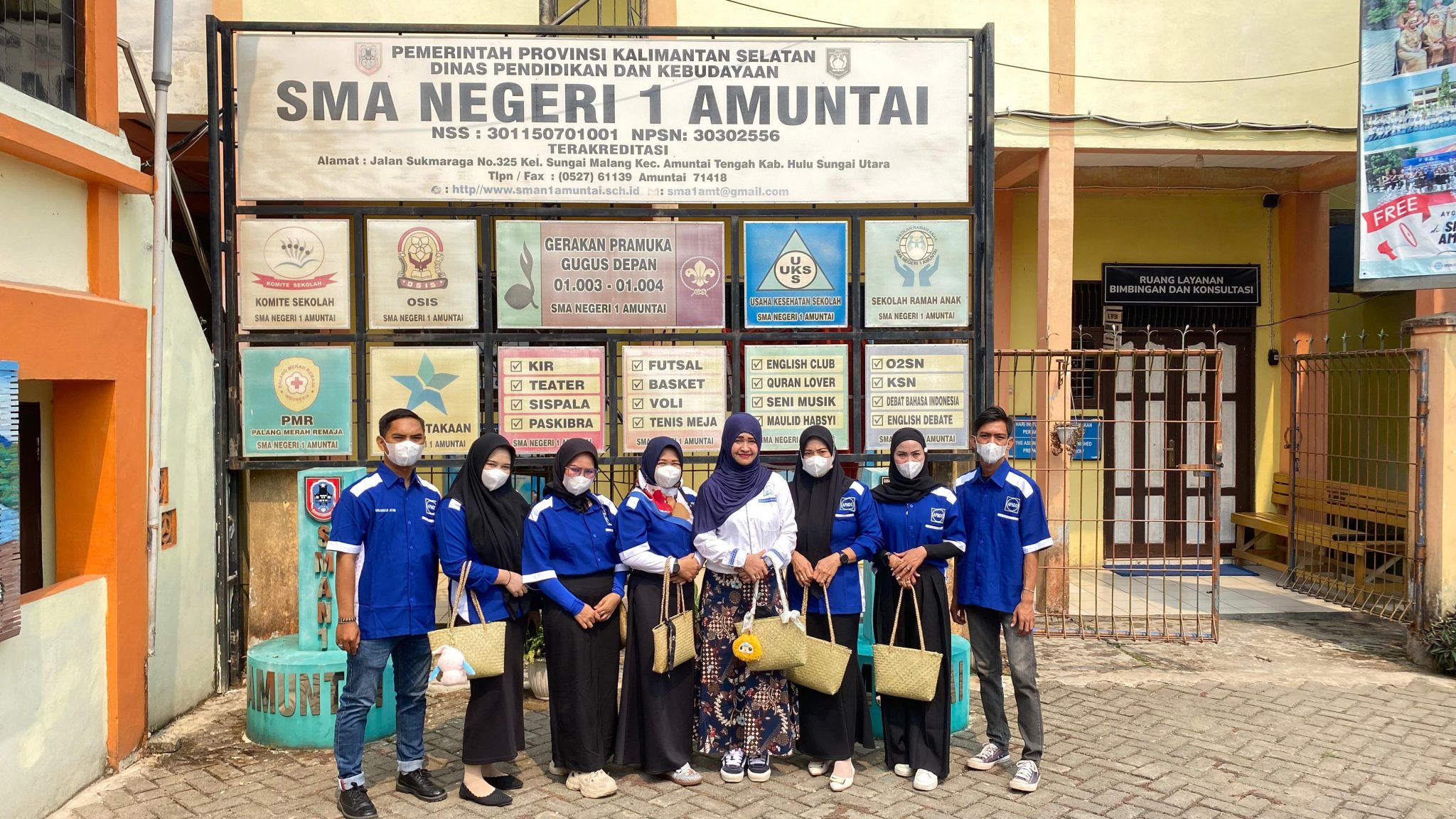
AMUNTAI — Haze blanketing several areas of Hulu Sungai Utara (HSU), South Kalimantan, has once again raised serious concerns over air quality and public health. Amid the worsening conditions, the Hulu Sungai Utara District Leadership Board of the Indonesian Employers Association (DPK APINDO HSU) took concrete action by distributing 1,000 free packages containing masks and vitamins to students of SMAN 1 Amuntai on Thursday (August 27, 2026).
The social initiative, which began at around 10:30 a.m. Central Indonesia Time (WITA), was more than simply a charitable activity. It highlighted the importance of involving multiple stakeholders, including the business community, in protecting the health of students amid deteriorating air quality.
Chairwoman of DPK APINDO HSU, Romeir Emma Ramadayanti Rivilla, said the distribution of the 1,000 mask and vitamin packages was a concrete expression of concern for the health of young people.
“We distributed 1,000 packages of masks and vitamins to students of SMAN 1 Amuntai today. This is a manifestation of our concern for the health of children amid the current haze conditions,” Emma said.
According to Emma, schools must not be overlooked when air quality deteriorates. Students still need to attend classes and continue their education, but at the same time, they require protection from exposure to unhealthy air.
She emphasized that haze is not merely an environmental issue. It can also affect public health and comfort, including the health of students who engage in educational activities every day.
“The haze conditions in recent days have the potential to significantly affect the health of our children as well as their learning activities,” she stressed.
The initiative is in line with the government's concerns over the health impacts of haze. The Ministry of Health has explained that smoke from forest and land fires can contain materials that pose health risks, including causing eye and skin irritation as well as respiratory problems.
In addition to distributing masks and vitamins, APINDO HSU urged students and school authorities to reduce unnecessary outdoor activities while air quality remains poor.
Emma advised students to avoid outdoor activities unless absolutely necessary.
“If there is no urgent need to go outside, it is better to remain indoors, whether in the classroom or at home, in order to protect your health,” she said.
The advice is particularly relevant because exposure to air pollution cannot be assessed solely by the visibility of smoke. Fine particulate matter such as PM2.5 is also an important indicator of air quality.
The Meteorology, Climatology and Geophysical Agency (BMKG) provides monitoring data on PM2.5 concentrations and air quality across various parts of Indonesia. Its monitoring system categorizes PM2.5 concentrations according to air quality levels, ranging from good to hazardous.
Therefore, the public should not rely solely on whether the air appears visibly hazy. Monitoring air quality through reliable data is an important part of determining whether outdoor activities are safe.
Haze is often viewed simply as reduced visibility or the presence of a smoky odor. In reality, the issue is much broader.
Haze associated with forest and land fires can carry particulate matter and various pollutants that may adversely affect health. BMKG has noted that airborne particulates can originate from a range of sources, including forest fires and open waste burning.
Under certain conditions, people may experience symptoms such as eye irritation, coughing, sore throats and respiratory difficulties. Vulnerable groups require particular attention.
The Ministry of Health advises people to reduce outdoor activities when air quality deteriorates. Those who must go outside are encouraged to wear appropriate masks or respirators, maintain healthy and hygienic habits, and seek medical attention immediately if they experience health problems.
Against this backdrop, APINDO HSU's distribution of masks carries an important educational message. Masks do not address the source of the haze, but they can serve as one form of personal protection to reduce exposure when people need to engage in outdoor activities.
Behind the haze problem lies a larger issue that cannot be ignored: forest and land fires, commonly known as karhutla in Indonesia.
Addressing forest and land fires cannot begin only after smoke has spread into residential areas. Prevention must start as soon as the potential for fires is identified.
BMKG provides information on hotspot monitoring, smoke distribution and predictions of potential fire risks based on meteorological conditions. Such information is important for government authorities, communities, businesses and other stakeholders in strengthening preparedness.
For this reason, the haze issue must be treated as a cross-sectoral concern. The government has a responsibility to strengthen prevention and monitoring efforts. Communities must refrain from indiscriminate land burning. The business sector also has significant opportunities to contribute through corporate social and environmental responsibility programs.
The initiative undertaken by APINDO HSU at SMAN 1 Amuntai represents one concrete example of such business-sector involvement.
Schools have a strategic role in responding to deteriorating air quality. They are not only places where education takes place, but also environments where young people can be protected and encouraged to develop healthy habits.
Therefore, the response to haze should not stop at distributing masks. Schools can also strengthen education on air quality, environmental cleanliness, proper mask use, limiting outdoor activities and recognizing symptoms of health problems.
The initiative is particularly relevant given that the Hulu Sungai Utara District Government has previously taken measures to address haze conditions in the area, including distributing masks to residents and urging people to limit outdoor activities when the haze becomes dense.
This means that APINDO HSU's efforts to protect students are part of a broader response to an air-quality problem that has become a concern in the region.
Emma stressed that the distribution of masks and vitamins should not be viewed merely as a ceremonial activity.
Haze cannot be resolved simply by distributing masks. Masks are only one protective measure. The root causes are linked to forest and land fire prevention, environmental monitoring, weather conditions, public awareness and the government's ability to respond rapidly to changes in air quality.
Therefore, social initiatives such as the one carried out by APINDO HSU should be encouraged as part of a broader collective movement.
The business sector can strengthen environmental education. Schools can improve health literacy. Government authorities can enhance air-quality monitoring. Communities can contribute by preventing land and forest fires.
With such an integrated approach, concern for public health can go beyond the provision of assistance and develop into a collective movement.
Poor air quality should not be regarded as an ordinary consequence of the dry season, particularly when its effects begin to enter educational spaces and disrupt students' activities.
Data from the Ministry of Health as of August 21, 2026, indicate that the impact of forest and land fires has become a serious public health issue in several parts of Indonesia. The ministry reported that more than 3 million people across 37 regencies and municipalities in seven provinces had been directly affected by haze from forest and land fires, including in South Kalimantan.
The figure underscores the need for public vigilance against haze to be proactive rather than reactive.
People need access to reliable air-quality information. Schools need mitigation measures. The government must strengthen forest and land fire prevention. The business community must take part. At the same time, communities must protect the environment and refrain from activities that could trigger fires.
Amid these conditions, DPK APINDO HSU's initiative to distribute 1,000 packages of masks and vitamins to students of SMAN 1 Amuntai deserves recognition as a concrete expression of social responsibility.
Yet the most important message goes beyond the number of packages distributed.
Haze is not merely about a sky turning gray. It is about air quality, public health, continuity of education, the safety of young people, and our collective responsibility to protect the environment.
Therefore, when air quality deteriorates, vigilance must increase. When the haze thickens, protection must be strengthened. And when forest and land fires occur, prevention must begin at the source.
Source: Supersemar News